This is a free online chromatic tuner. Press Start, allow the microphone, and play one note: it shows the nearest of the twelve notes, the frequency it hears, and how many cents you are away. It reads from about 50 to 1,000 Hz, which covers guitar, bass, ukulele, mandolin, banjo and the violin family, one note at a time. No account, no download. It sits alongside the rest of our free guitar tools.
What a chromatic tuner reads
Chromatic means all twelve notes: C, C#, D, D#, E, F, F#, G, G#, A, A# and B. A basic guitar tuner only listens for the six open strings of standard tuning and tells you which one you are near. A chromatic tuner makes no such assumption. Whatever you play, it finds the closest of the twelve and measures the gap.
Three readings come back, and each answers a different question.
- The note name answers "what am I playing?" On the standard preset it is written in sharps, C# rather than Db. Two presets, Eb standard and C standard, switch the names to flats, to match their strings.
- The frequency, to two decimals, answers "where exactly?" It is the raw measurement, before any rounding to a note.
- The cents answer "how far, and which way?" A cent is a hundredth of a semitone. A minus sign means flat, so tighten; a plus sign means sharp, so loosen. The display treats anything within 5 cents as in tune, and the number keeps counting beyond 50 when a string is far off, so a string a half step low reads around minus 100 instead of hiding at the end of the scale.
The reading refreshes about once a second. A note that dies away immediately never gets a stable one, so let each note ring. The ring around the reading is a strobe by default: a band that drifts one way when you are flat, the other way when you are sharp, slowing as you close in and stopping on the note. Under Settings, Static mode swaps it for an arc that grows with the deviation, and Advanced display turns the ring off altogether.
How the cents are counted, and why the preset still matters
The note name is always the nearest of the twelve, whatever preset is selected. The cents are not always measured from that note, and it is worth knowing why, because it is what lets a chromatic tuner tune a string that is badly out.
- Near one of the preset's strings, less than a whole step away, the tuner treats that string as your target. It shows "Tune toward" with the string's name, and counts the cents to it. A low E string sitting at D# reads D#, but the cents tell you how far it is from E.
- Anywhere else, the reading is purely chromatic: nearest note, cents from that note. This is what you get on an instrument whose notes do not match the preset.
- If you pick a string yourself, under Settings then Open string sound, the tuner aims for that string even from half an octave away, and plays its pitch so you can hear the target.
So for anything other than a six string guitar in standard tuning, choose the preset that matches your instrument when there is one. When there is none, the reading still works: you simply read the note names and aim for 0 on each.
The range it hears
Every tuner has a floor and a ceiling. This one changes them with the preset, because a low note needs a longer listening window than a high one. Here are the four detection ranges, and the notes at their edges.
| Presets | Range | Notes, at A 440 |
|---|---|---|
| Standard and most guitar tunings, Nashville, mandolin, 5 string banjo | 50 to 1,000 Hz | G#1 (51.91 Hz) to B5 (987.77 Hz) |
| Drop C, Open C, C standard, Drop B, baritone, 7 string | 50 to 500 Hz | G#1 (51.91 Hz) to B4 (493.88 Hz) |
| 4 and 5 string bass | 28 to 220 Hz | A#0 (29.14 Hz) to A3 (220.00 Hz) |
| Ukulele, low G and baritone ukulele | 120 to 600 Hz | B2 (123.47 Hz) to D5 (587.33 Hz) |
Two consequences are worth spelling out. The ceiling on the standard preset was raised to 1,000 Hz so that the E string of a violin or a mandolin, at 659.26 Hz, is read at the right octave. And near the floor, under the guitar's low E, the standard preset's short window gets less precise: for low notes, the Drop C family of presets doubles the window, and the bass presets widen it again and go down to 28 Hz.
Which instruments it works with
Any instrument whose open strings fall inside those ranges, played one note at a time. The table lists the open strings, the preset to choose, and the dedicated page when we have one.
| Instrument | Open strings | Preset to choose | Dedicated page |
|---|---|---|---|
| Guitar, steel or nylon | E2 A2 D3 G3 B3 E4 | Standard, or any guitar tuning in the menu | Online guitar tuner |
| Classical guitar | E2 A2 D3 G3 B3 E4 | Standard | Classical guitar tuner |
| Bass, 4 or 5 strings | (B0) E1 A1 D2 G2 | 4 string bass or 5 string bass, never standard | Bass tuner |
| Ukulele | G4 C4 E4 A4 | Ukulele, low G or baritone ukulele | Ukulele tuner |
| Mandolin | G3 D4 A4 E5 | Mandolin | Mandolin tuner |
| 5 string banjo, open G | G4 D3 G3 B3 D4 | 5 string banjo | Banjo tuner |
| Violin | G3 D4 A4 E5 | Mandolin: same four notes, same octaves | None |
| Viola | C3 G3 D4 A4 | Mandolin for G, D and A; the low C is read chromatically | None |
| Cello | C2 G2 D3 A3 | Drop C, for its wider analysis window on the low C | None |
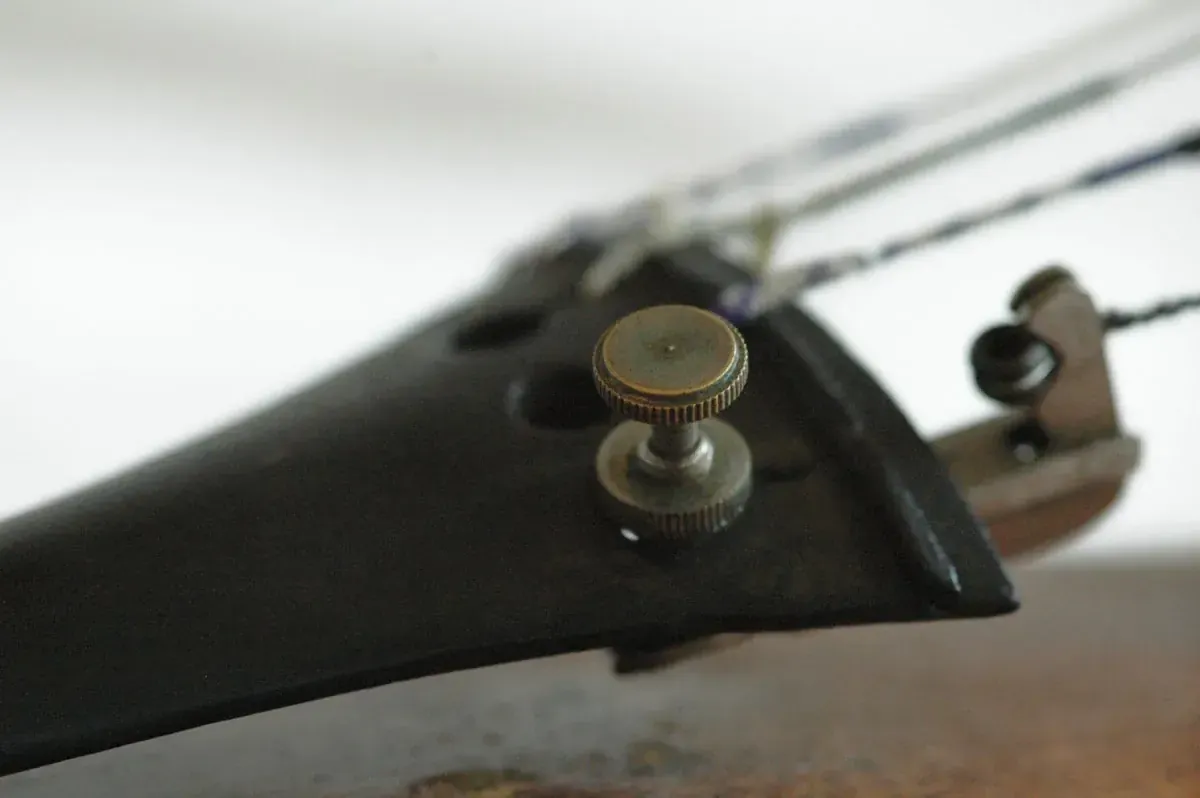
The violin family has no preset of its own, and we built and checked this tuner on fretted instruments. The notes are inside the range, so it names them, but treat the suggested presets as a starting point rather than a promise. On a cello, the low C at 65.41 Hz is the note to watch: the Drop C preset is suggested because it widens the analysis window for exactly that pitch, and its own strings happen to include C2, G2 and A3.
What it will not do
A tuning page that promised everything would be guessing on your behalf. Here is where this one stops.
- Chords. It reads one note at a time. Strum a chord and the reading jumps or stays blank. Tune string by string, the others muted.
- Anything above 1,000 Hz. That rules out the top of a piccolo, the top two octaves of a piano, and the highest frets of a guitar: on the high E string, everything above the 19th fret.
- Very low notes on the wrong preset. Below 50 Hz nothing is read on a guitar preset. A bass's low E, at 41.20 Hz, needs a bass preset.
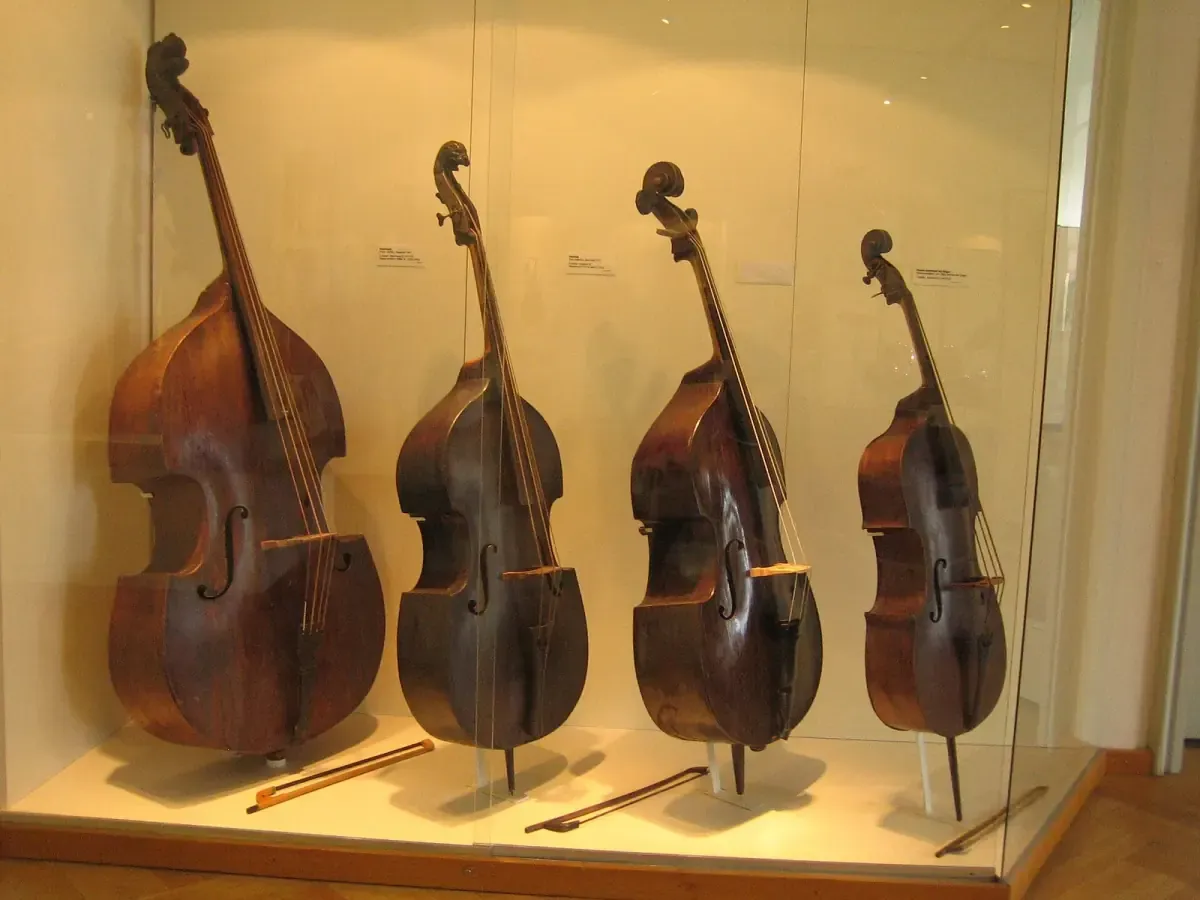
- Piano tuning. Its lowest A, at 27.50 Hz, is under even the bass floor, and tuning a piano is a different trade.
Twelve reference notes
Sometimes you need a note, not a measurement: to sing a starting pitch, to check your ear, or to tune with no microphone at hand. Here is one chromatic octave, from the C below the reference A to the B above it.
Chromatic octave, A4 = 440 Hz
The twelve notes from C4 to B4. Each button plays one, at the exact frequency.
Each tone is synthesized by your browser at the exact frequency, with A4 at 440 Hz as the reference. No audio file is downloaded.
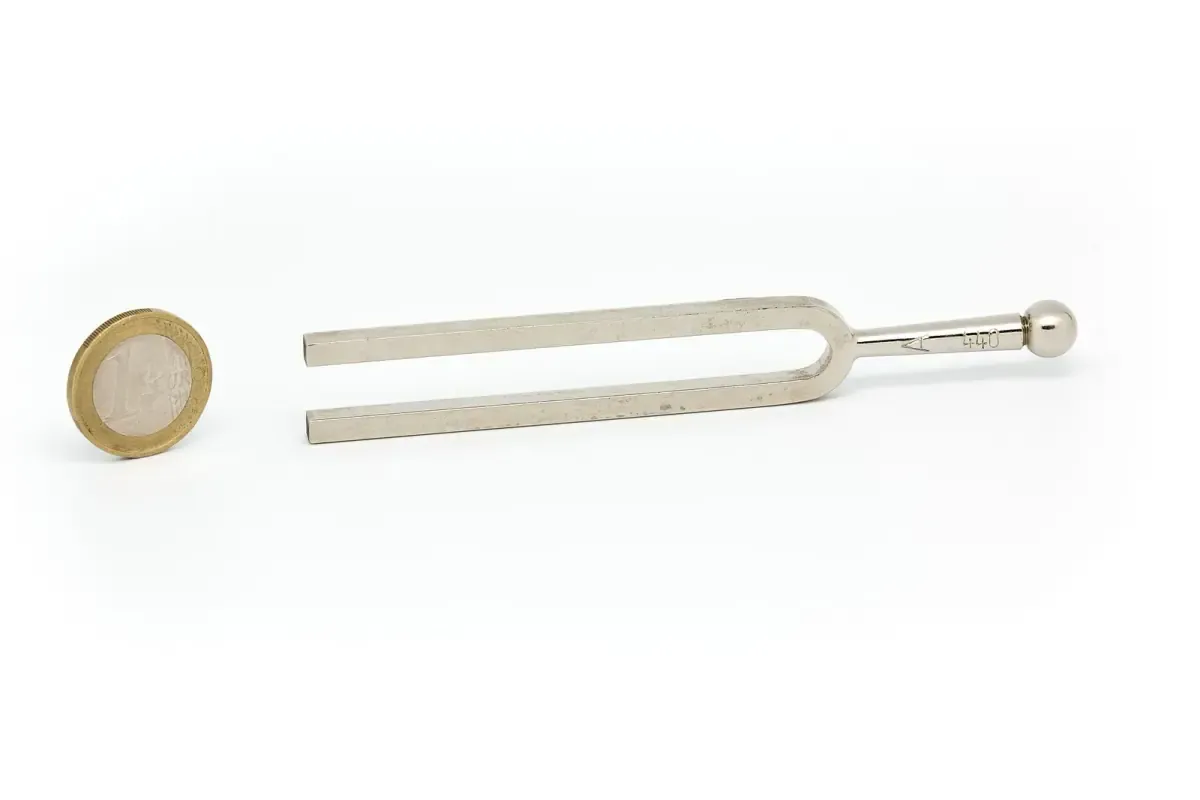
The tuner itself lets you change that reference: A at 440, 442 or 432 Hz, in the menu next to the preset. Leave it on 440 unless the group or recording you play with uses another. The 432 Hz vs 440 Hz page explains what the choice really changes.
Frequently asked questions
What is a chromatic tuner?
Why does it tell me to tune toward E when I play a D sharp?
Can I tune a violin with this tuner?
Can it tune a piano?
Can a chromatic tuner read a chord?

Who made this
Guitar Social Club is the work of Yohann Abbou, a guitar teacher in Paris. He teaches adults, which shapes everything here: people with jobs, limited practice time and a clear idea of the songs they want to play. The tools come out of his lessons, which is why none of them asks you to sign up before it works, and why this one shows you cents rather than a green light. The rest of our free guitar tools work the same way.
More about Yohann on his page, and about why Guitar Social Club exists.