This is a free online lap steel tuner that listens through your microphone. It opens on C6, C E G A C E, the classic lap steel tuning for Hawaiian music, western swing and vintage jazz. Press Start, play one open string, let the note settle, then bring it to 0 cents. If you play in A6, E7 or Open D, the table further down tells you which preset to load. No account, no download. It sits alongside the rest of our free guitar tools.
C6 lap steel tuning: C E G A C E
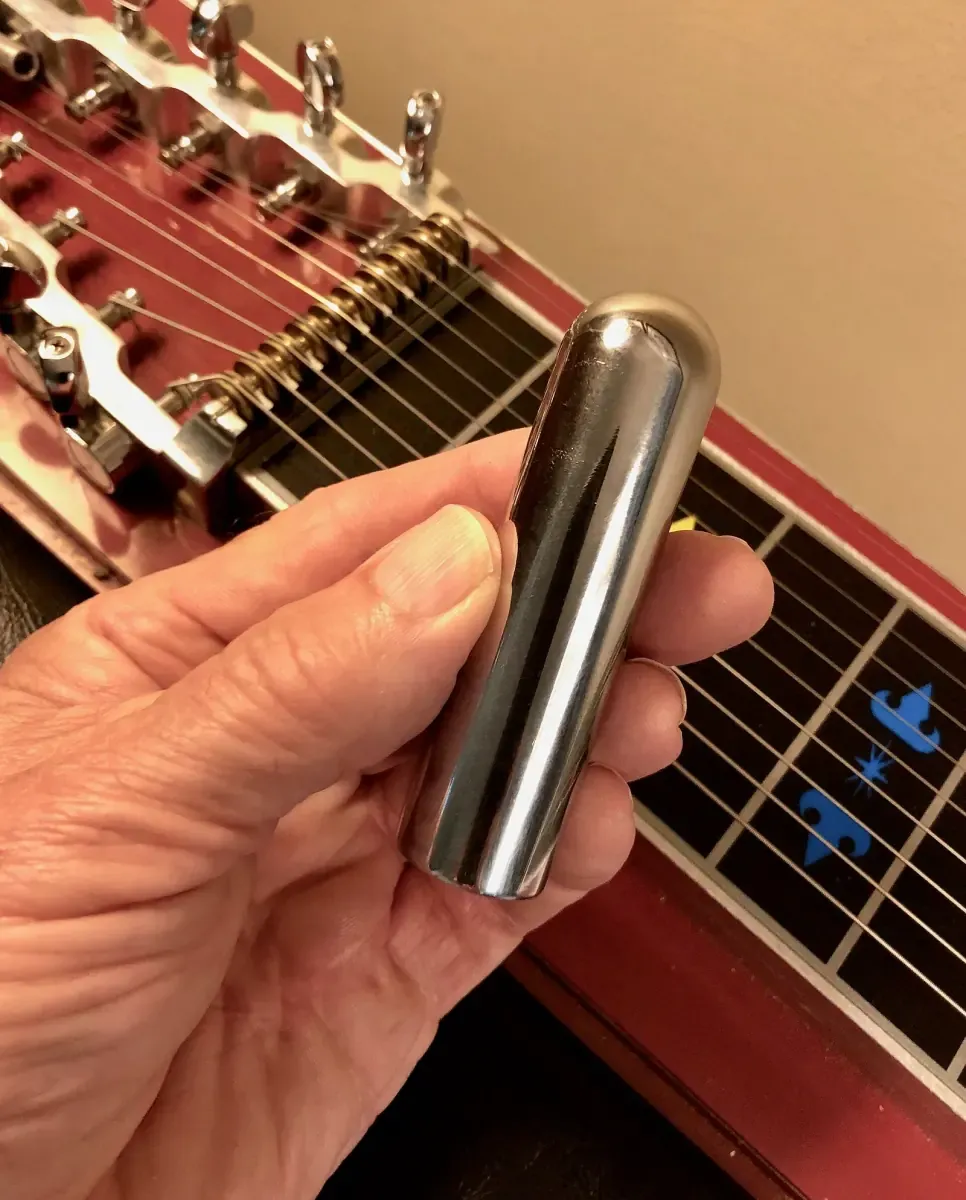
A lap steel is played flat, strings up, on your lap or on a stand. Your left hand does not press the strings down: it slides a steel bar along them. So the open strings have to be tuned to a chord, and the bar carries that chord up and down the neck. That is why the tuning matters so much on this instrument. It decides which chords and lines fall under the bar.
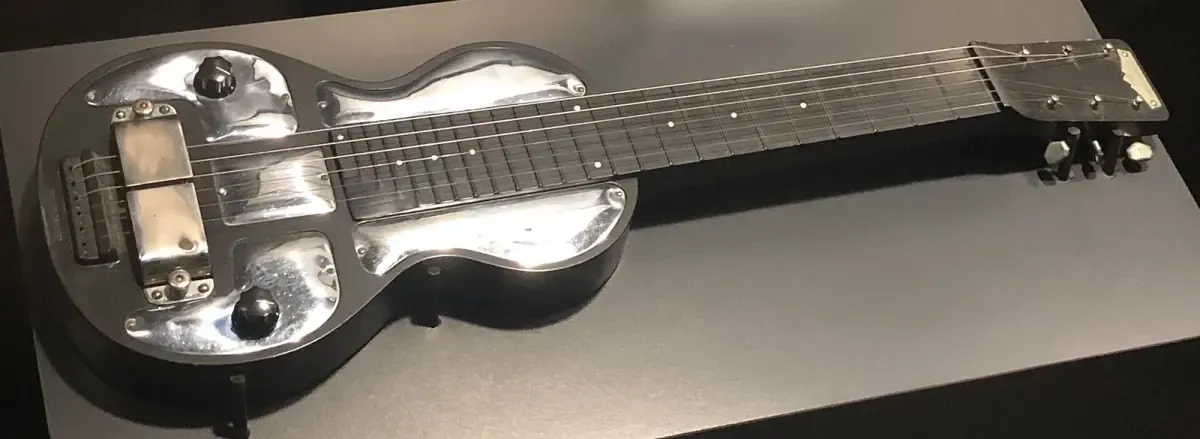
C6 reads C E G A C E from the thickest string to the thinnest, or C3 E3 G3 A3 C4 E4 with the octaves. Players often shorten it to CEGACE. Those four different notes, C, E, G and A, are exactly the notes of a C6 chord: a C major chord with the sixth, A, added. That added sixth is what gives the tuning its soft, open color and more chord options than a plain major tuning.
| String | Note | Target, at A 440 | Role in the chord |
|---|---|---|---|
| Sixth, the thickest | C3 | 130.81 Hz | The root, C |
| Fifth | E3 | 164.81 Hz | The major third |
| Fourth | G3 | 196.00 Hz | The fifth |
| Third | A3 | 220.00 Hz | The sixth, the note that names the tuning |
| Second | C4 | 261.63 Hz | The root again |
| First, the thinnest | E4 | 329.63 Hz | The third again, on top |
Reference tones, A4 = 440 Hz
One button per string in C6, from the low C up to the high E. Play the string on the lap steel and bring it to the same pitch.
Each tone is synthesized by your browser at the exact frequency, with A4 at 440 Hz as the reference, so it stands in for a tuning fork. No audio file is downloaded.
The reference pitch menu, next to the tuning menu, offers A at 432, 440 and 442 Hz. It opens on 440, which is what the frequencies above assume. Change it and all six targets move together.
Lap steel fretboard in C6: every note
C E G A C E over 12 frets, from the thickest string to the thinnest. The four notes of the C6 chord, C, E, G and A, are highlighted. At the twelfth fret they line up across all six strings again, one octave up.
How to tune a lap steel, string by string
Work from the thickest string to the thinnest, then go round a second time. Lap steel strings ring for a long time, so mute the ones you are not tuning with the side of your hand.
- Press Start and allow the microphone. The tuner is already on C6. Nothing is recorded or uploaded: the signal is analyzed in your browser and discarded.
- Open Settings and tick Open string sound. One button per string appears. Tap the button of the string you are tuning: you hear its note, and the tuner now measures against that string, even when it is several half steps away. That helps on a lap steel that arrives in some other tuning.
- Play the open string and wait for the reading to settle. The message tells you to tighten or loosen. Stop at 0 cents, finishing by tightening up to the pitch rather than loosening down to it.
- Once all six are in tune, pull each string gently away from the fretboard to settle it, play the open strings again and correct a second time.
- Check with the bar. Lay it across all six strings directly over the twelfth fret: you should hear the open chord exactly one octave higher, clean and centered.
Without the buttons, the tuner works in automatic mode. It names whatever note it hears, and when that note is less than a whole step from one of the six C6 strings, it measures the cents against that string. A string more than a whole step off is named but not yet aimed at, which is why the buttons are the quicker route when you start far from C6.
Playing in tune with the bar
A lap steel can be perfectly tuned and still sound out of tune, because the bar sets every pitch above the open strings. Two habits fix most of it.
- Put the bar directly over the fret wire. Not in the middle of the space between two frets, where a guitarist's finger would go. Behind the fret, the note comes out flat.
- Mute behind the bar. Strings ringing between the bar and the nut, or ringing on after a slide, blur everything. Damp them with the trailing fingers of the bar hand or the palm of the picking hand.
Here is what the open strings give you in C6, with nothing under the bar. Each group moves as one shape: move the bar up and the same strings play the same chord type, one half step higher per fret.
| Strings you pick | Notes | Chord |
|---|---|---|
| All six | C E G A C E | C6 |
| All but the third | C E G C E | C major |
| Third, second, first | A C E | A minor |
| Fourth to first | G A C E | A minor 7 |
With the bar at the fifth fret, all six strings give F6; at the seventh fret, G6. Open strings, fifth fret and seventh fret are the three chords of a song in C, and the twelfth fret brings you back to C an octave up.
A6, E7 and Open D: which preset to load
C6 is not the only lap steel tuning. Players coming from blues or slide guitar often use Open D; E7 brings a bluesier, country color; A6 is a western swing favorite. Open D has its own preset. A6 and E7 do not, but the tuner reads them accurately with the right preset loaded, because the note name is always chromatic.
The choice of preset matters for one reason. When a string is less than a whole step from one of the strings of the loaded preset, the tuner assumes you are aiming for that string, measures the cents against it, and names it in its message. So each tuning below comes with a preset whose strings either match its notes or sit at least a whole step away from them. Once your string is on its note, the reading is measured to that note.
| Tuning | Notes, low to high | Hz, at A 440 | Preset to load |
|---|---|---|---|
| C6 | C3 E3 G3 A3 C4 E4 | 130.81, 164.81, 196.00, 220.00, 261.63, 329.63 | Lap steel C6, the one this page opens on |
| A6 | A2 C#3 E3 F#3 A3 C#4 | 110.00, 138.59, 164.81, 185.00, 220.00, 277.18 | Open A |
| E7 | E2 B2 E3 G#3 D4 E4 | 82.41, 123.47, 164.81, 207.65, 293.66, 329.63 | Open E |
| Open D | D2 A2 D3 F#3 A3 D4 | 73.42, 110.00, 146.83, 185.00, 220.00, 293.66 | Open D |
- A6, A C# E F# A C#. This is C6 moved down a minor third. The bar positions and chord shapes are the same, three frets higher: what you play at the third fret in C6 sounds at the sixth fret in A6. Load Open A. Four of its strings, A, E, A and C#, are A6 notes, and the other two A6 notes sit a whole step or more from every Open A string. Do not use the C6 preset here: its C strings are only a half step from your C# strings, and a C# in tune would read 100 cents sharp.
- E7, E B E G# D E. Open E with the second string raised from B to D, the seventh of the chord. Load Open E. Five strings match, and the D sits a whole step below the preset's high E and further still from its B, so it is simply named.
- Open D, D A D F# A D. A plain D major chord, the most direct way into blues slide. Load Open D, which is exactly this tuning.
Which lap steel tuning should you choose?
- C6 if the sound you are after is Hawaiian, western swing or vintage jazz. The sixth gives softer chords and more melodic options than a plain major tuning.
- Open D if you come from blues or slide guitar. Every fret is a major chord, and the logic is close to what you already know.
- E7 for a dominant, bluesy color with a natural pull toward the next chord. It suits blues, country and roots rock.
- A6 for western swing and fast lines: the same layout as C6, three half steps lower.
Some players own a double neck lap steel precisely to keep two tunings ready, often C6 on one neck and E7 or Open D on the other, and switch between them in the middle of a song.
Lap steel, pedal steel and dobro
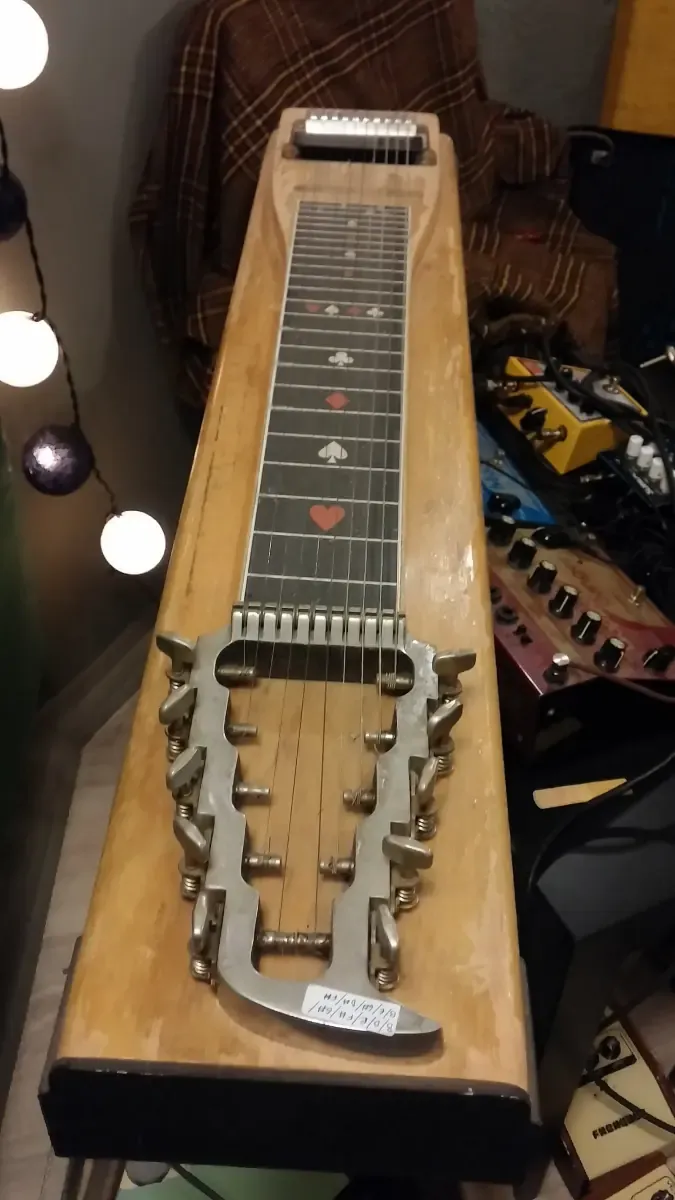
Three instruments played with a bar, often confused. The difference is in what can change while you play.
| Instrument | How it is played | Usual tunings |
|---|---|---|
| Lap steel | Flat on your lap or a stand, with a bar, no pedals | C6, A6, E7 or Open D, depending on the style |
| Pedal steel | Flat, with a bar, plus pedals and knee levers that change notes while you play | Often E9 and C6 on double neck models |
| Dobro, resonator | Acoustic, with a metal cone; the squareneck kind is played flat with a bar | Mostly open G high bass, G B D G B D |
If you play a resonator guitar, the dobro tuner opens straight on its usual tuning. If you play slide on a regular guitar held upright, start with the Open G tuner or the Open D tuner.
Frequently asked questions
What is the most common lap steel tuning?
What are the notes of C6 tuning?
Can I tune a lap steel with a guitar tuner?
Is a lap steel the same as a pedal steel?
Why does my lap steel sound out of tune when the strings are in tune?
How do I tune a lap steel to A6?

Who made this
Guitar Social Club is the work of Yohann Abbou, a guitar teacher in Paris. He teaches adults, which shapes everything here: people with jobs, limited practice time and a clear idea of the songs they want to play. The tools come out of his lessons, which is why none of them asks you to sign up before it works, and why this one shows you cents rather than a green light. The rest of our free guitar tools work the same way.
More about Yohann on his page, and about why Guitar Social Club exists.